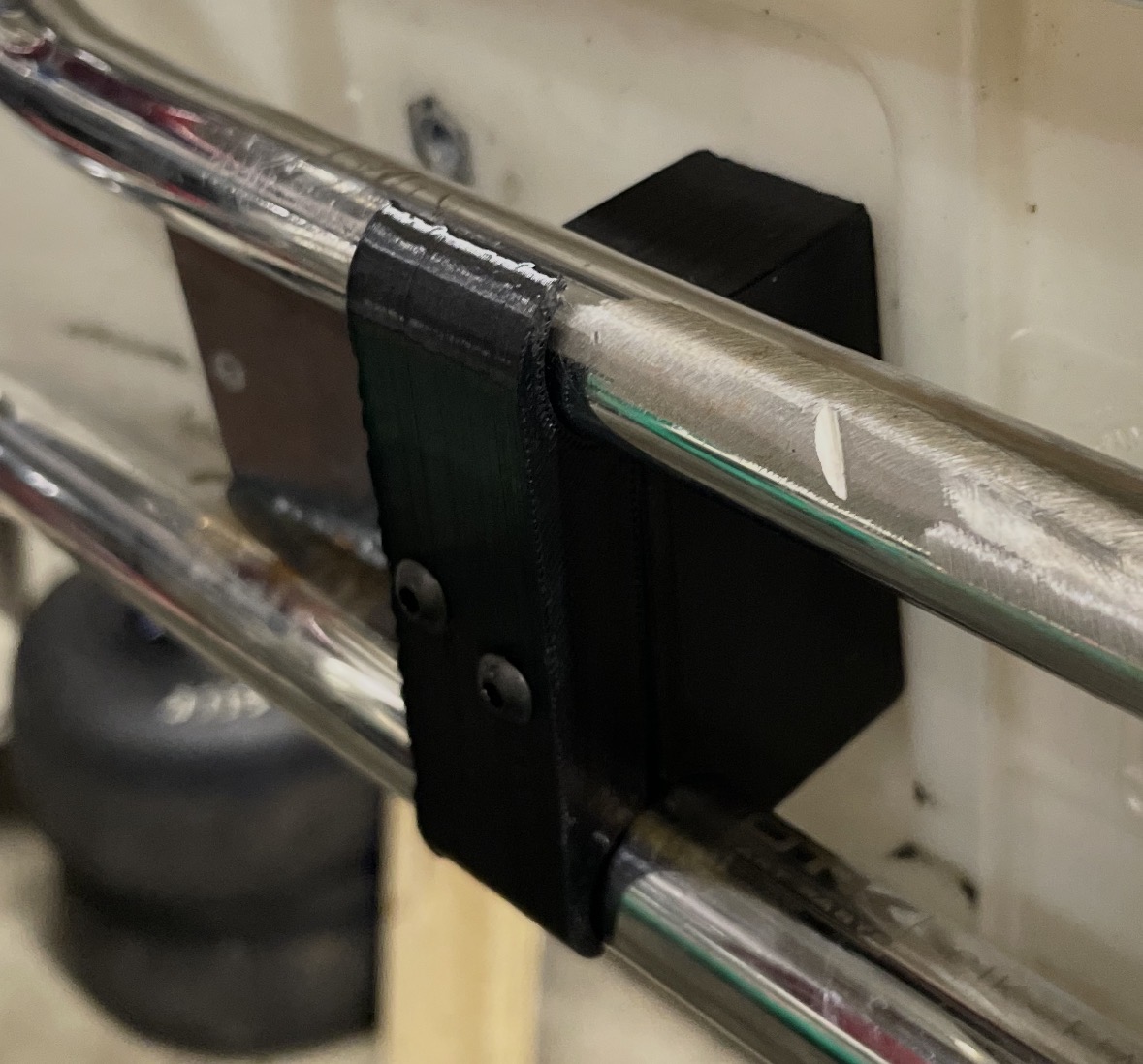
Final brackets on kart
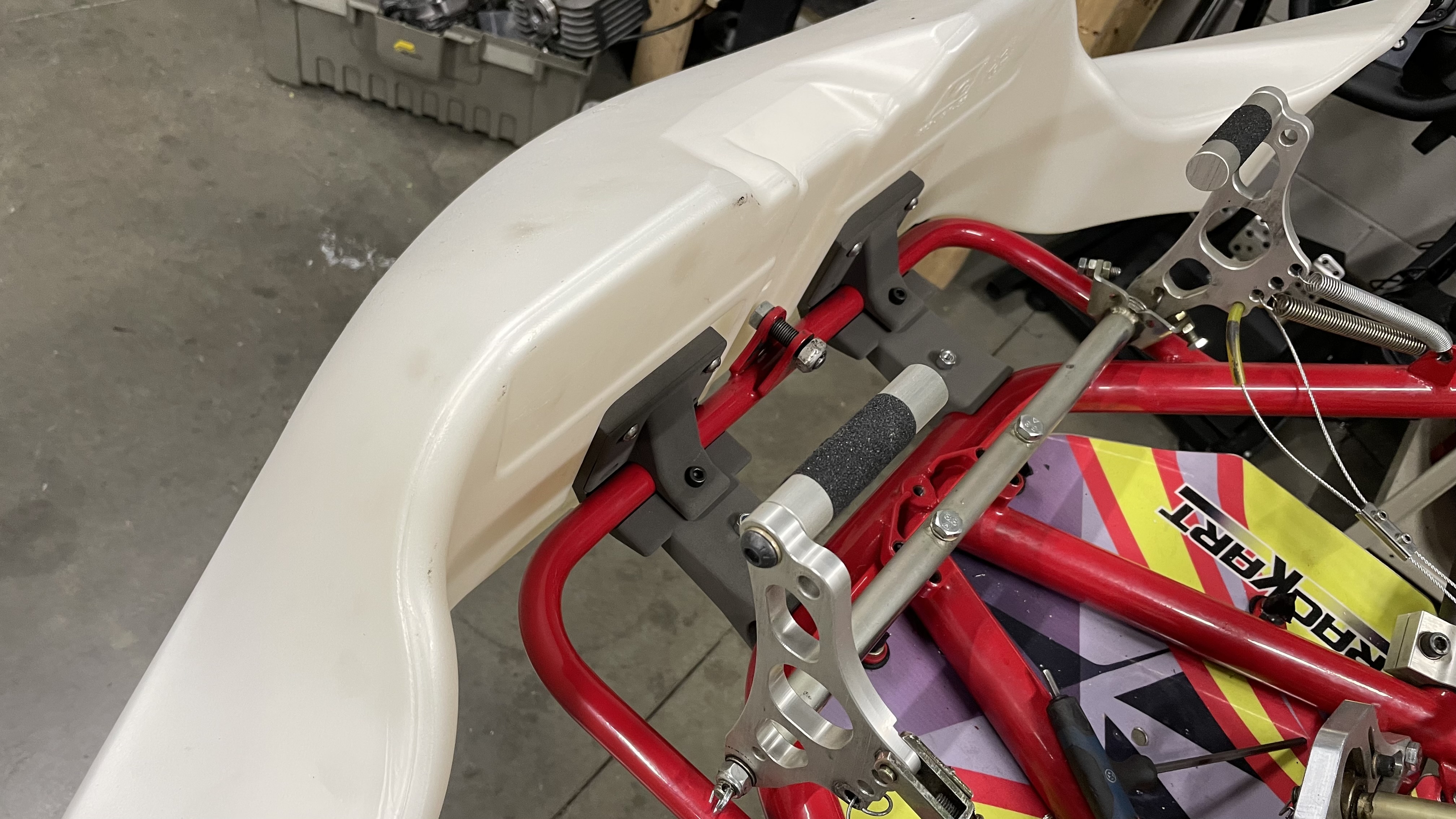
Bracket detail
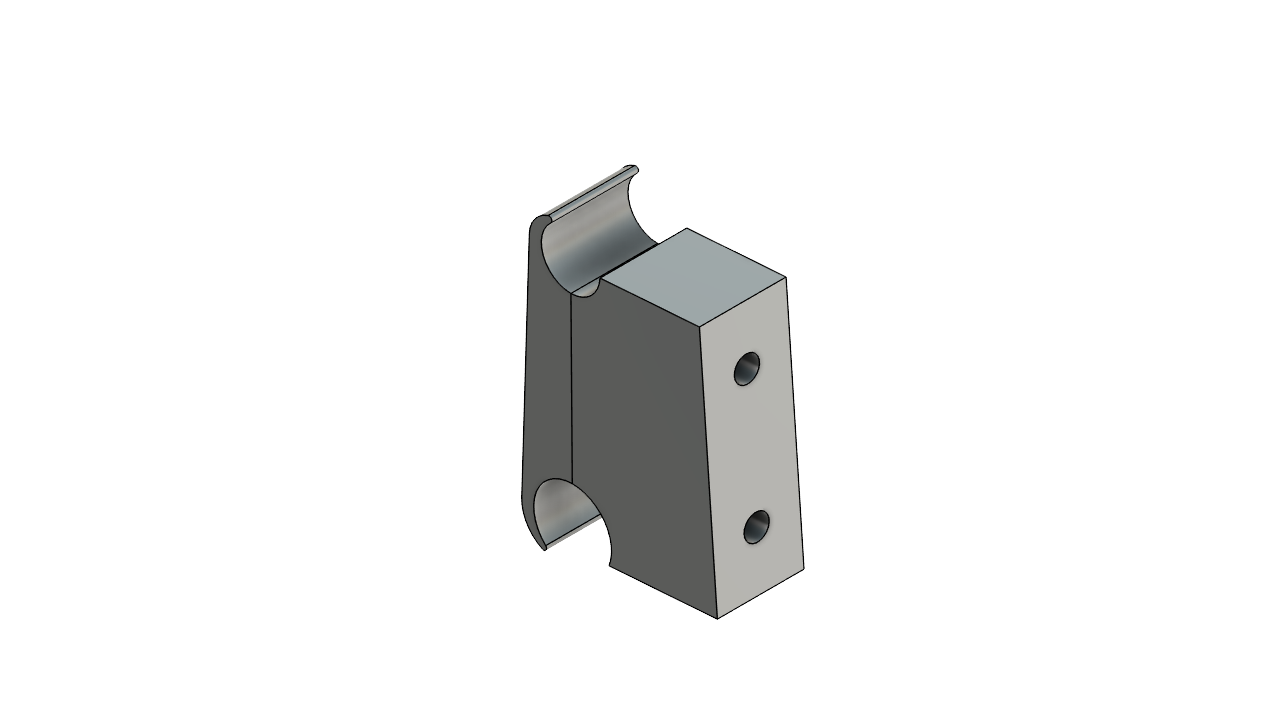
CAD model
Engineering Projects — Purdue Grand Prix · Fabrication
An iterative materials engineering challenge — designing and getting race-legal bumper brackets for the Purdue Grand Prix kart across four different materials and multiple regulatory submissions.
The Purdue Grand Prix Foundation has some of the strictest rules on the circuit when it comes to materials — especially plastics. As Engineering Lead for the Honors College Racing Club, I needed to design new bumper brackets for the kart, but every material choice required either fitting within pre-approved specs or going through a formal variance process with the safety committee. What started as a geometry problem quickly became a materials selection problem, and then a manufacturing consistency problem. Four iterations and three material changes later, the brackets are race-legal and on the kart.
Geometry came first. I prototyped the bracket shape in PLA to nail the fit around the chassis and bumper mounting points - PLA is fast to print, cheap to iterate, and the tolerances are predictable. Once the geometry was dialed in, the real challenge began: finding a material that could pass Grand Prix safety review.
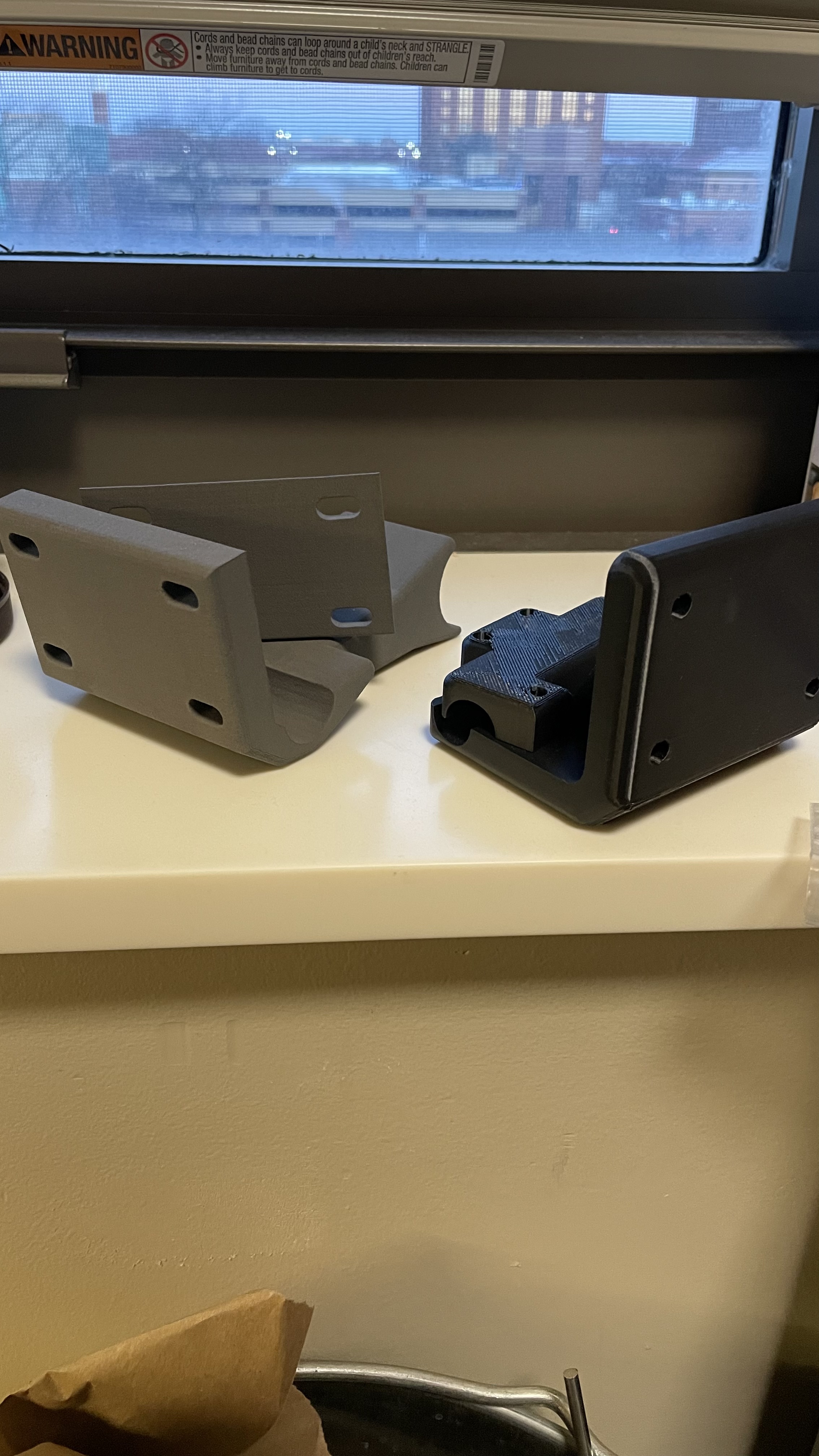
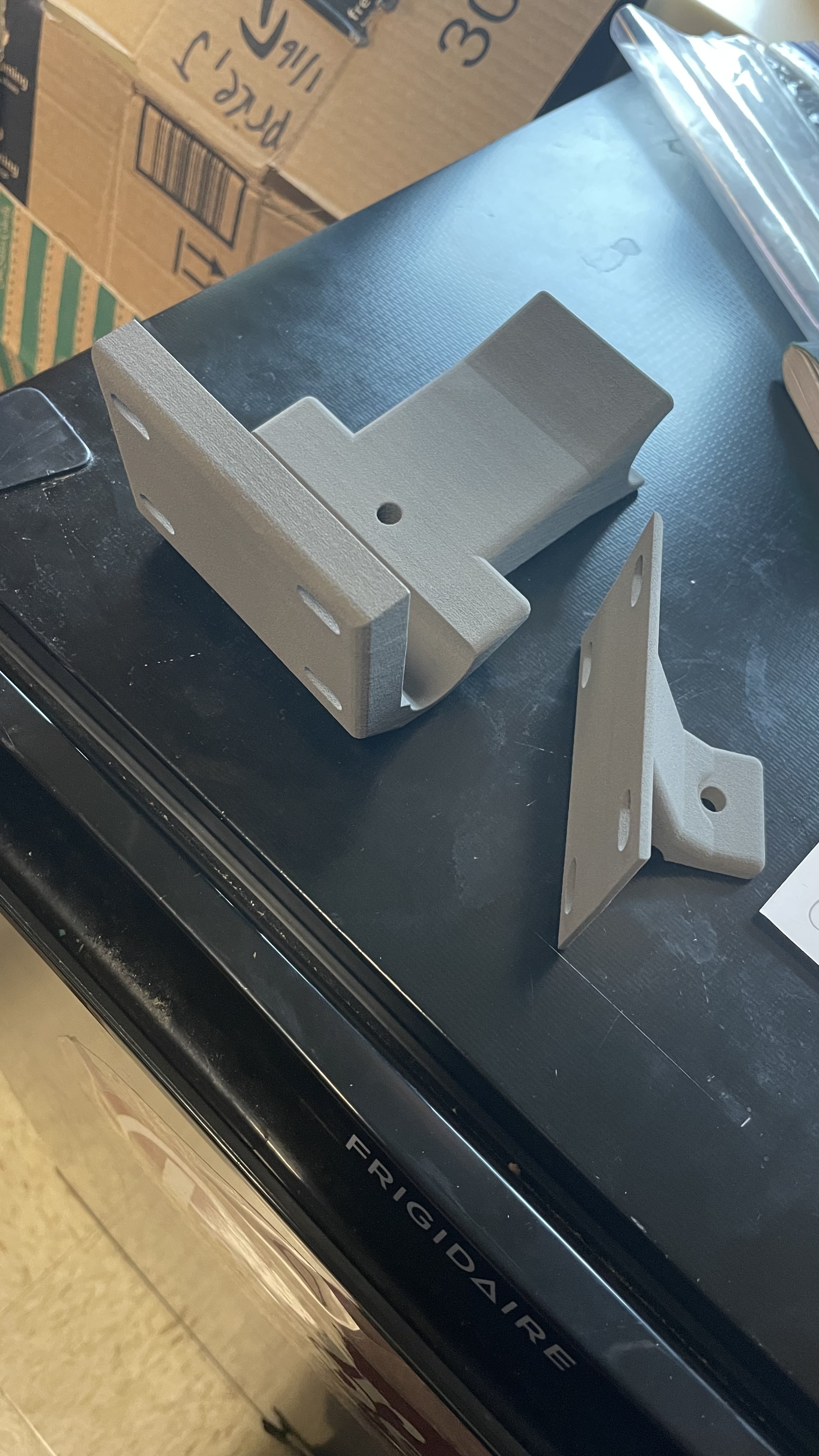
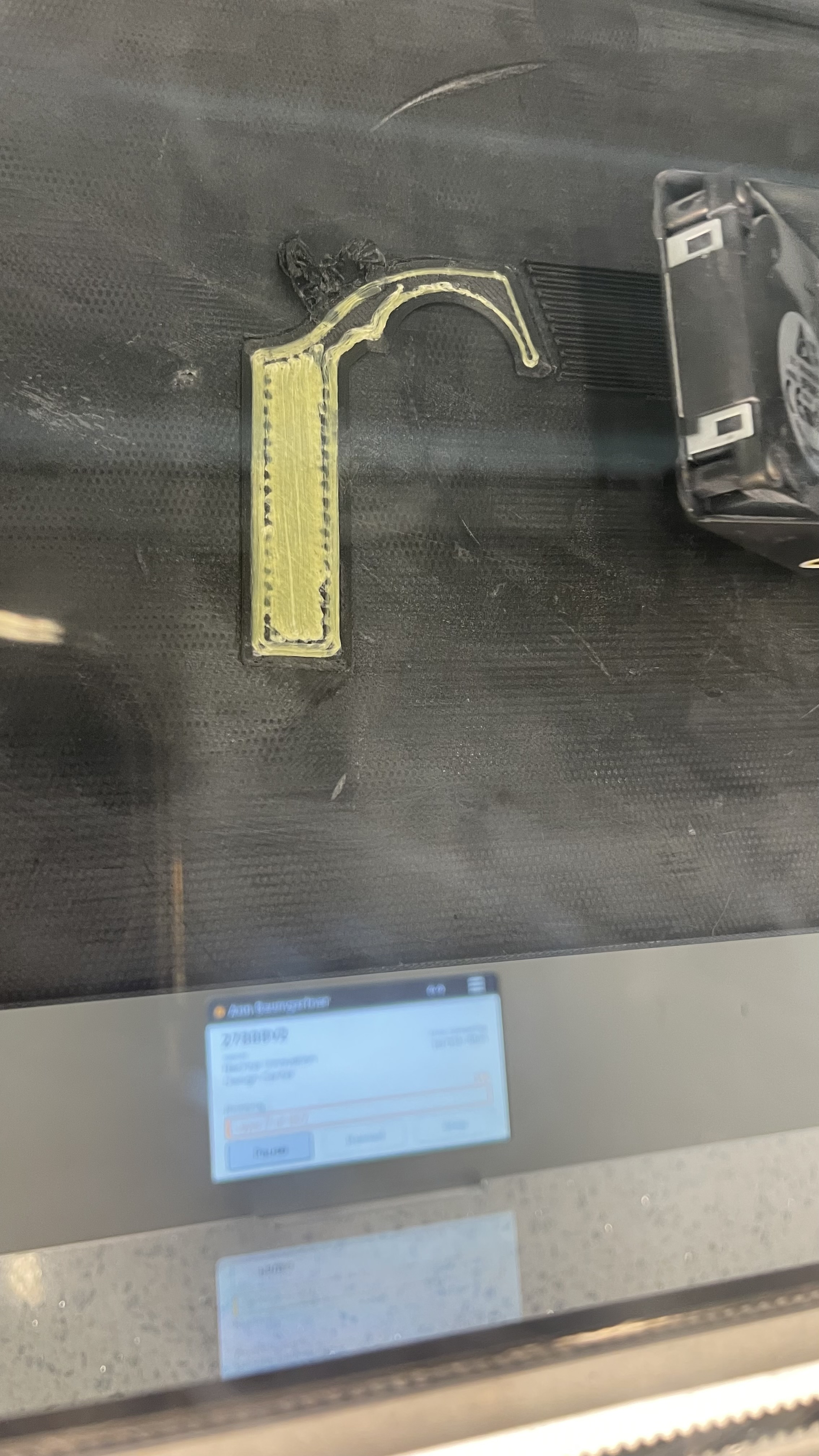
The three failed iterations, each ruled out for a different reason.
The SLS Nylon 12 parts required a variance submission — I wrote and filed the materials form, and the safety committee approved it. But on the track, the parts were too brittle, shattering on contact rather than absorbing impact. The carbon fiber nylon with continuous Kevlar reinforcement, printed on a Markforged, was theoretically the right answer — Kevlar is specifically designed to absorb impact energy. But the Markforged process introduced micro-voids and fiber discontinuities that were invisible until the part failed. With no reliable way to identify a defective part before it broke on the kart, I couldn't justify running them.
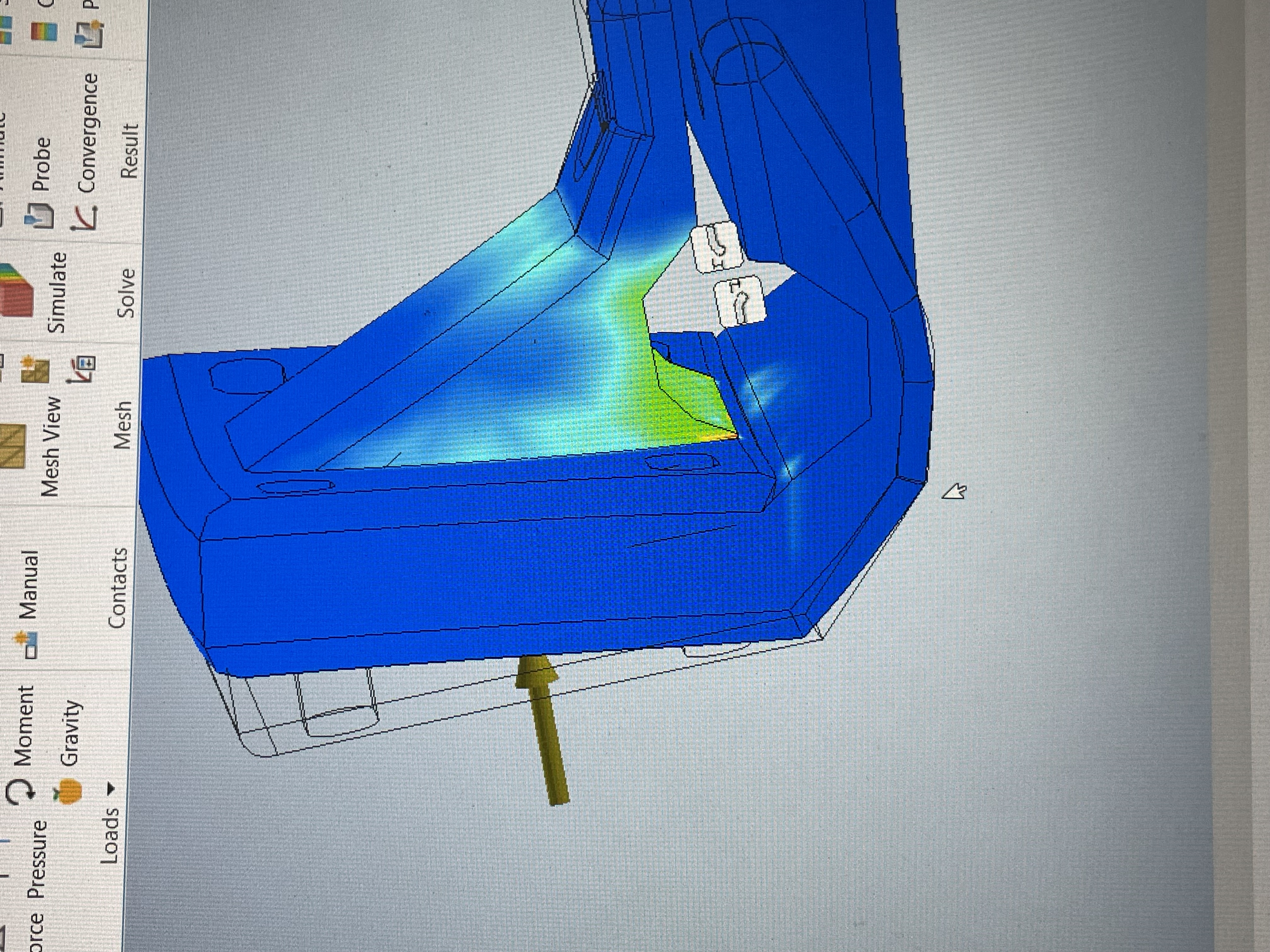
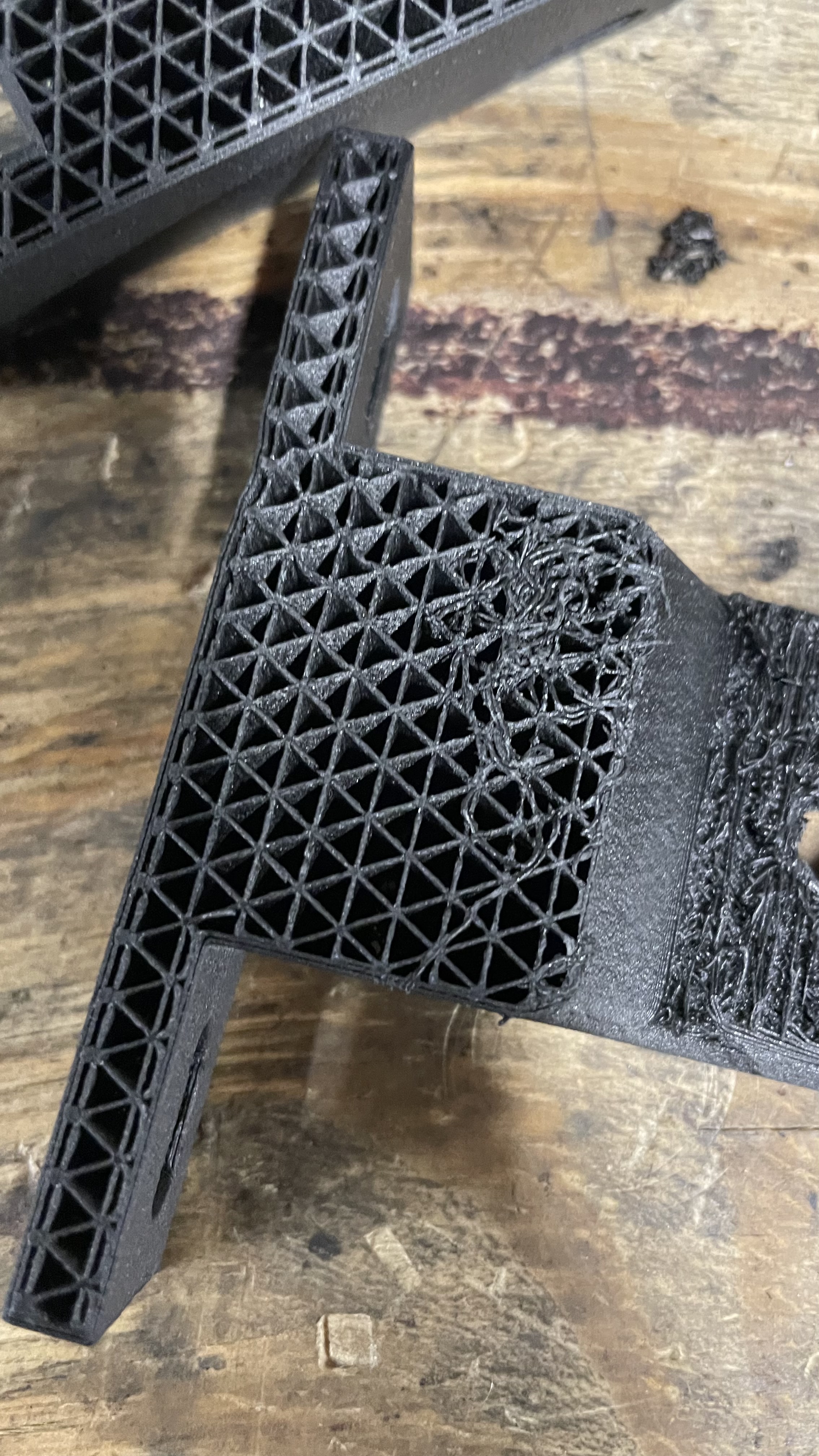
FEA analysis of the PAHT-CF part (left) and an internal defect on the Markforged part (right).
After a chassis change created the need for a redesigned bracket anyway, I took the opportunity to also change the material. PC-FR — a glass fiber reinforced polycarbonate filament with self-extinguishing properties - explicitly designed for fire and impact resistance, printed consistently on standard FDM equipment. The geometry was updated for the new chassis, printed in PC-FR, and submitted for approval. That's where the design sits now — on the kart and race-legal.
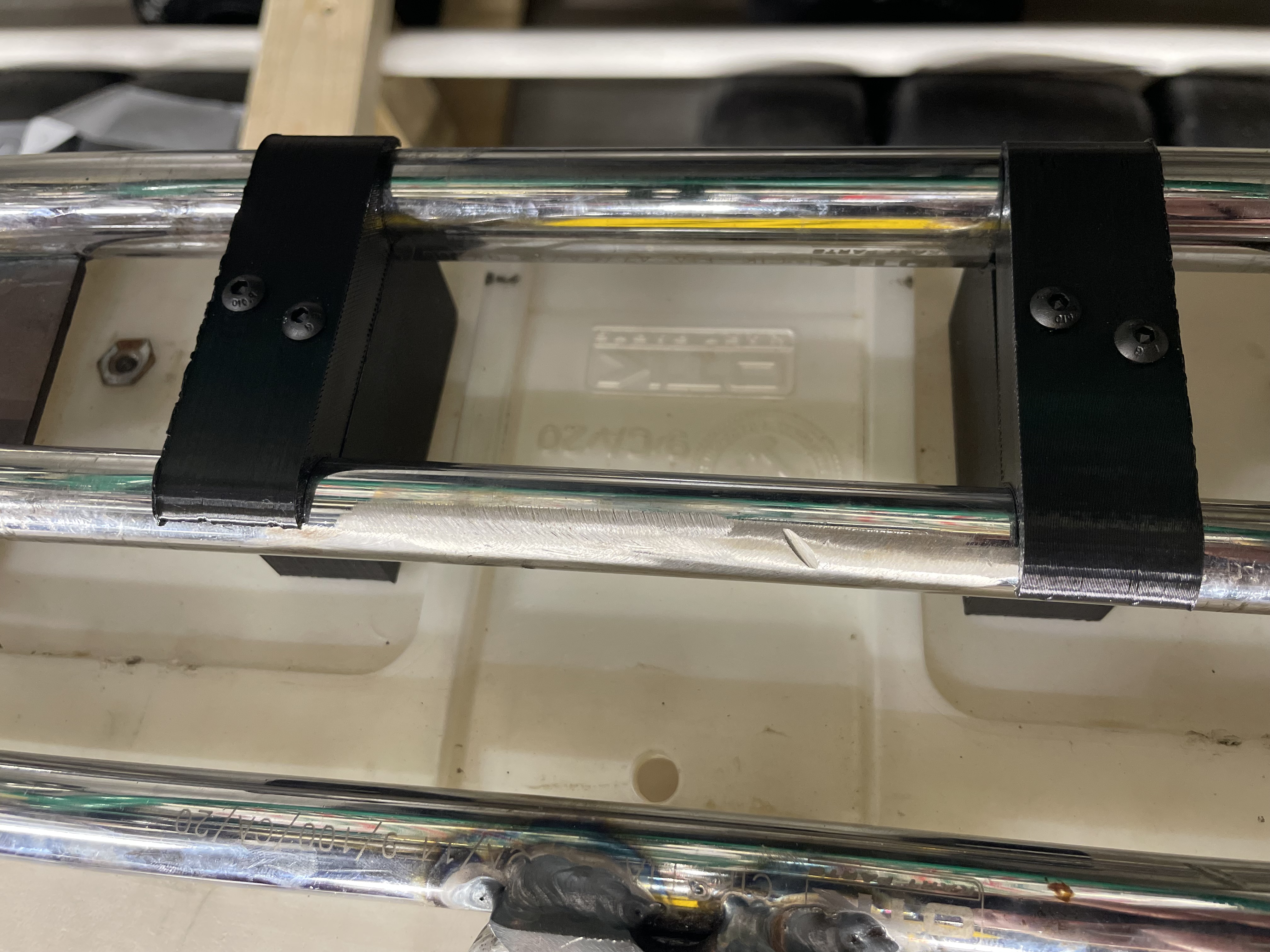
The current PC-FR brackets fitted to the new chassis configuration.
The brackets are running. More importantly, this project gave me a real-world lesson in the gap between material properties on a datasheet and material behavior in a manufactured part — Kevlar absorbs impact, but not if the fiber path has voids. It also reinforced that regulatory constraints aren't just bureaucratic friction; they force you to think about failure modes you might otherwise skip. Each iteration taught something the datasheet couldn't, and the final design is better for having gone through all of them.